Autumn
The Bluest EyeAutumn is both a seasonal frame and a retrospective vantage point: the narrator recalls that no marigolds grew in the fall of 1941 and connects their failure, as the community understood it then, to Pecola carrying her father’s baby. The season binds a visible absence in the natural world to a catastrophe in human life, while the narration’s later look back exposes the limits of the explanation the girls once accepted.
Seasonal Frame
The Autumn section opens amid sharply contrasting images: nuns pass quietly, while drunken men with sober eyes sing in the lobby of the Greek hotel. This juxtaposition places stillness beside disorder and makes the season a frame for a world whose apparent quiet does not mean that suffering has stopped.
The Missing Marigolds
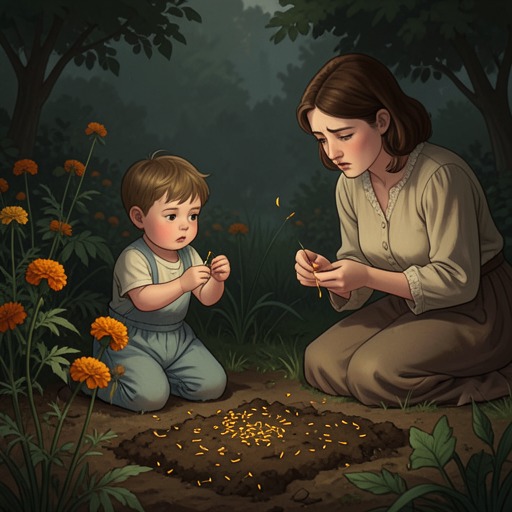
The narrator recalls that no marigolds appeared in the fall of 1941. Their absence becomes more than a detail of the season: it is the natural sign around which the children organize their account of what has happened. The memory begins with a collective voice, locating the explanation in what the girls thought at the time rather than presenting it as an established cause.
Retrospective Explanation
The girls believed the marigolds failed to grow because Pecola was having her father’s baby. The sentence brings ecological barrenness and human violation into the same thought, but it does not establish that the pregnancy literally caused the flowers’ failure. Instead, the remembered belief reveals how the children tried to make sense of an appalling event through the fate of the seeds they had watched. Autumn thus holds both the remembered explanation and the distance from which the narrator can tell it: the season registers a loss, while the narration preserves the children’s attempt to understand that loss.